Who funded the Scofield Reference Bible?
What if one of the most influential study Bibles in modern Christian history was not simply the product of scholarship and successful publishing — but the result of hidden financial, political, or ideological influence operating behind the scenes? For decades, claims involving Oxford University Press, Zionists, attorney Samuel Untermeyer, and even the Rothschild family have circulated through books, documentaries, sermons, websites, and online discussions seeking to explain the remarkable rise and global influence of the Scofield Reference Bible. To some, these connections appear to reveal a carefully coordinated effort to shape modern Christian views on Israel, prophecy, and Zionism.
But where did these allegations actually originate? Are they supported by contemporary historical evidence, or did the theory evolve gradually through speculation, association, and repetition over time? This investigation examines the origins and development of the Scofield funding theory through primary sources, publishing history, documented records, and the historical trail left behind by the authors who helped popularize the claims.
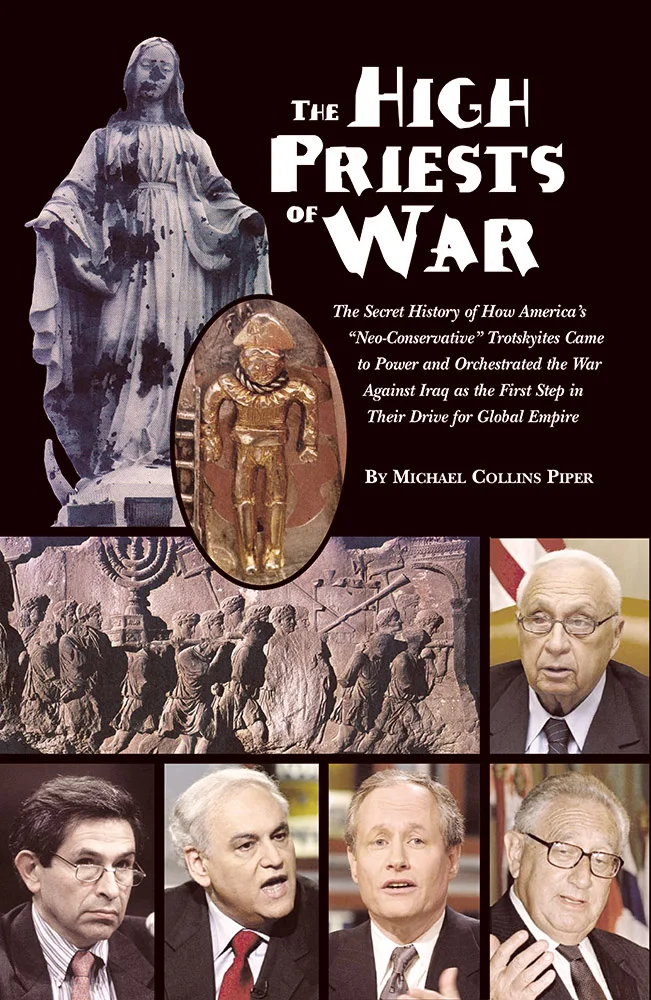
As an example of these common conspiratorial claims, we turn to author Michael Collins Piper. Piper was an American political writer, radio host, and conspiracy theorist (1960–2015) best known for controversial books and commentary published through outlets associated with populist and far-right political circles. He is most widely known for the book Final Judgment, which promoted disputed claims about the assassination of President John F. Kennedy, and later wrote extensively on Middle East politics, Zionism, and global conspiracy themes. Piper was a longtime contributor to the publication American Free Press.
On page 79 in his book The High Priests of War (American Free Press, 2004), Michael Collins Piper takes the theory a step further, alleging involvement by the most famous banking family in the world…the Rothschilds.
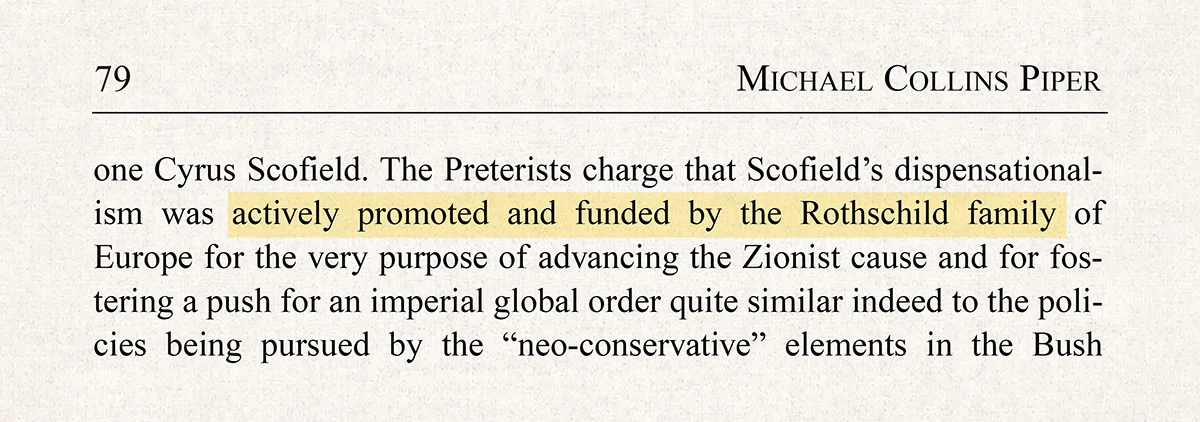
The introduction of the Jewish Rothschild name into Piper’s narrative is not incidental. It reflects a long-standing trend in modern conspiracy literature. Since the 18th century, the Rothschilds have been associated with international finance. However, this association has been amplified and distorted in popular media, where the family is frequently cast as a sinister, behind-the-scenes force shaping questionable global events.
Piper capitalizes on this dark reputation, and injects it into the Scofield narrative without any documentation, attributing it to hearsay from Preterist sources.
David W. Lutz is a political theorist and academic writer known for his criticism of neoconservatism, interventionist foreign policy, and Christian Zionism. In his chapter “Unjust War Theory: Christian Zionism and the Road to Jerusalem,” published in Neo-Conned! Again: Hypocrisy, Lawlessness, and the Rape of Iraq (2005), on page 147 Lutz expanded upon earlier Scofield conspiracy claims by arguing that the Scofield Reference Bible was funded through the influence of wealthy Zionist interests.
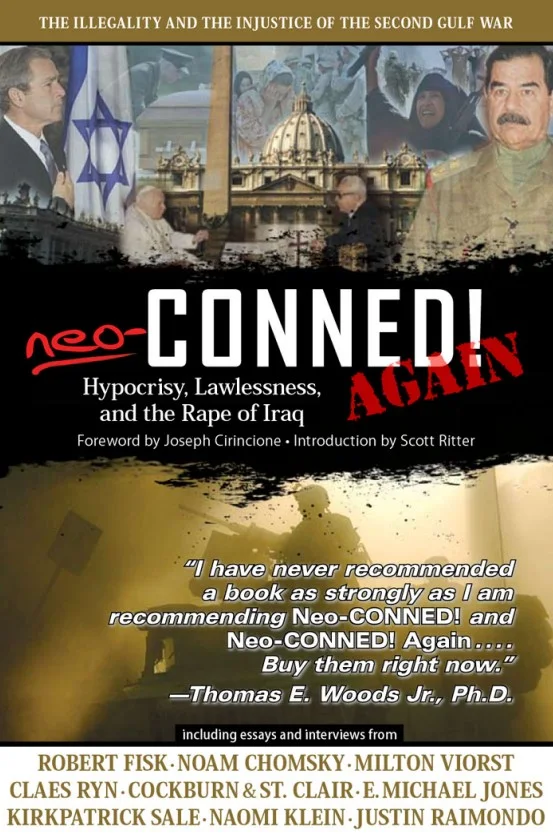

Lutz echoes Piper here, adding that Untermyer introduced wealthy and influential Zionists to Scofield. He repeats Piper’s claim of promotion and funding, nearly word for word. Nothing completely new here, just recycled and amplified in small but important ways. But now the false information will make a jump from print to digital on a conspiracy theory blog site (www.whale.to). On Tuesday, March 10, 2009, a writer identified as Robert Singer posted a rant filled with accusations in a jumbled montage of Jewish conspiracy theories. His article is titled The Scofield Bible, Oxford Publishing and the House of Rothschild.
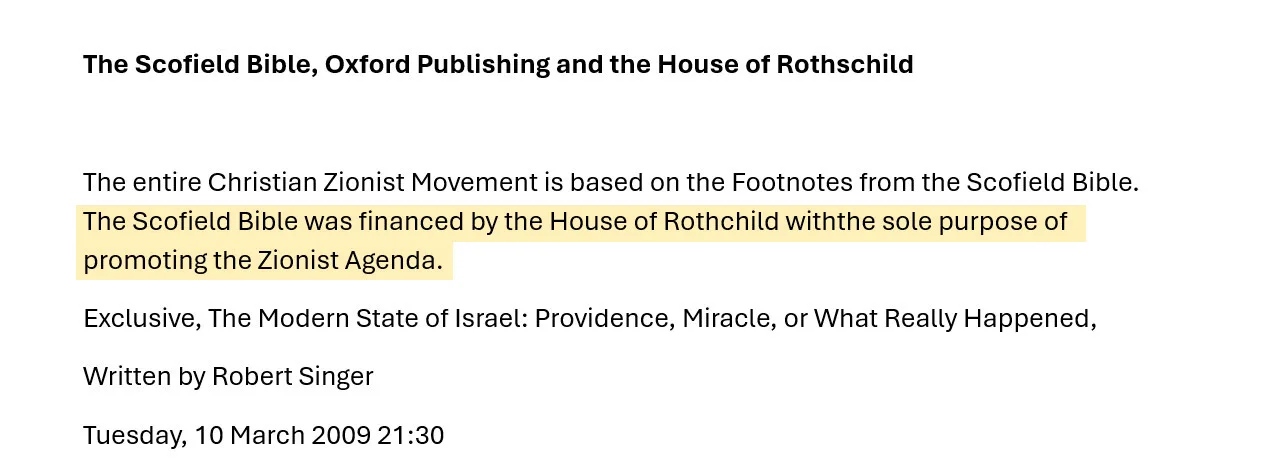
Singer wastes no time hurling accusations against Scofield, even in the summary leading in to the article. This opening salvo is largely a borrow from Piper who was apparently the first to claim that the Rothschilds financed Scofield. Piper used the phrase “very purpose” and here Singer changes it to “sole purpose.”
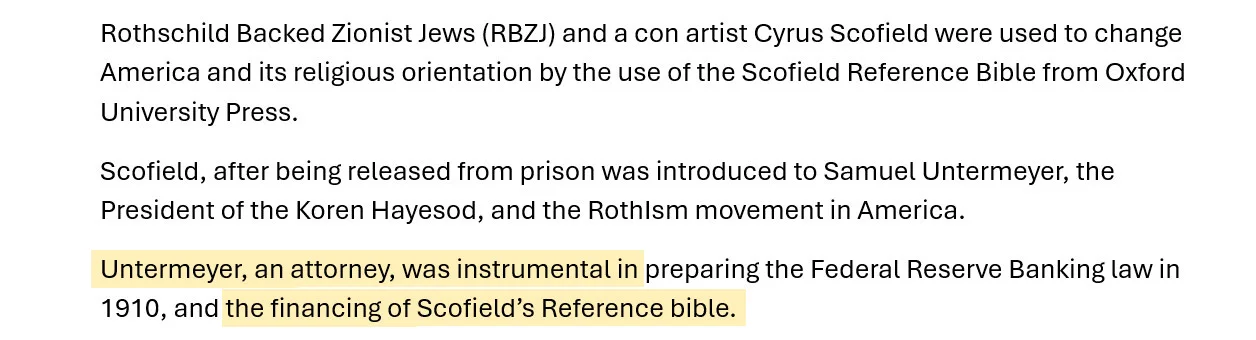
Piper, Lutz, and Singer all repeat the allegation that Scofield received funding from wealthy Zionists in general, or the Rothschilds in particular. It is crucial to note that Piper does not mention the Rothschilds in passing; his book says that the Rothschilds actively FUNDED Scofield. Apparently Piper’s 2004 book is the first known claim that the Rothschilds were involved in any capacity in the Bible’s production and publication.
Did the Rothschilds finance Scofield?
Unfortunately for the supposed connection to Zionist funding, we have multiple contemporaries of C.I. Scofield who identify the financial backers of this work… and none of them are Rothschilds. And none of them were even Jews. And worse yet for his theory, many of these records go back to the actual period in question
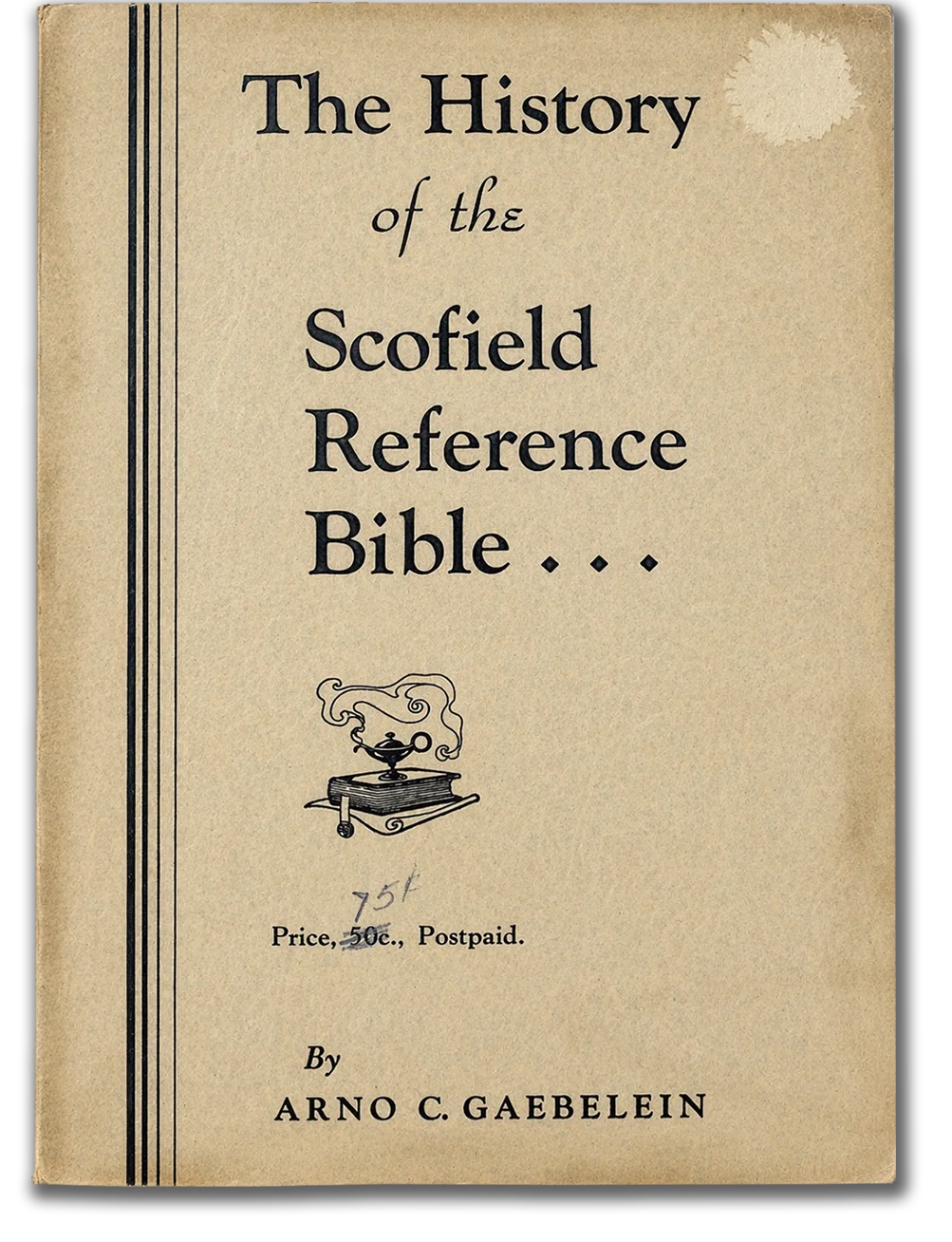
Arno C. Gaebelein (1861–1945) was a German-born American Bible teacher and author. A close associate of C. I. Scofield, he served as a consulting editor on the Scofield Reference Bible. His direct involvement gave him a valuable insider’s perspective on its origins and development. Writing as a participant rather than a critic, his account reflects firsthand knowledge of the people, process, and circumstances behind the project.
In 1943, as the globe was still in the throes of a second world war, Gaebelein published The History of the Scofield Reference Bible (Our Hope Publications). He recounts the origins and development of the project — including securing financial support and organizing contributors — while presenting the work as a straightforward product of evangelical initiative rather than hidden influence.
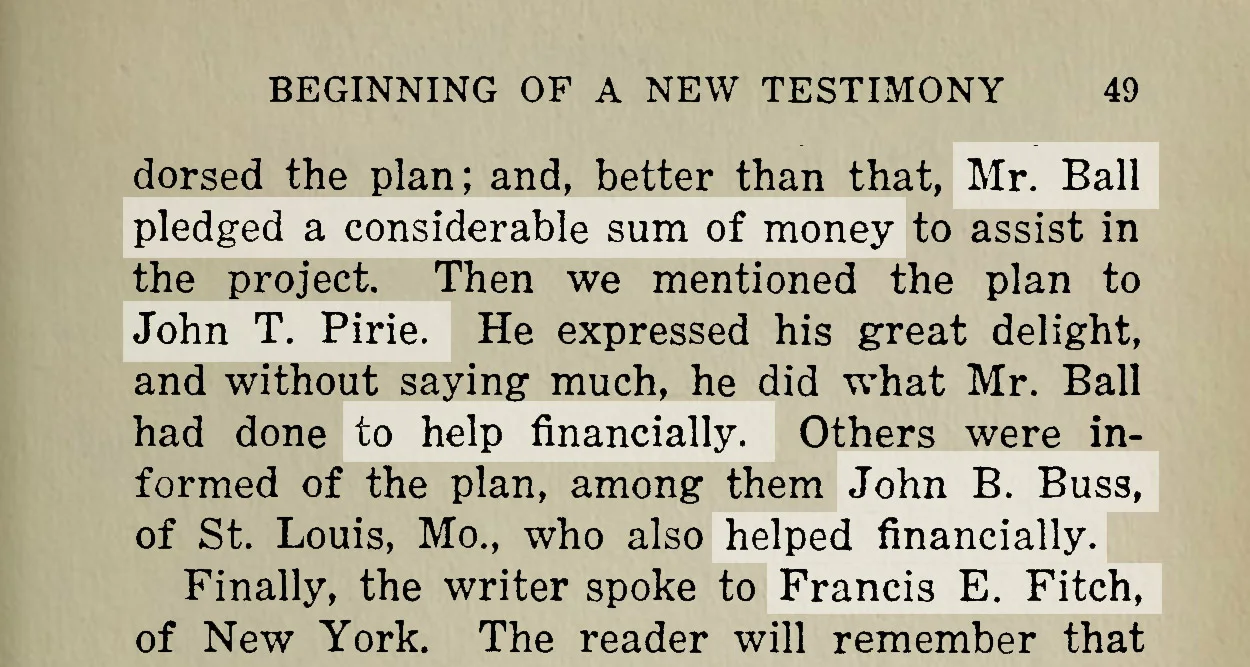
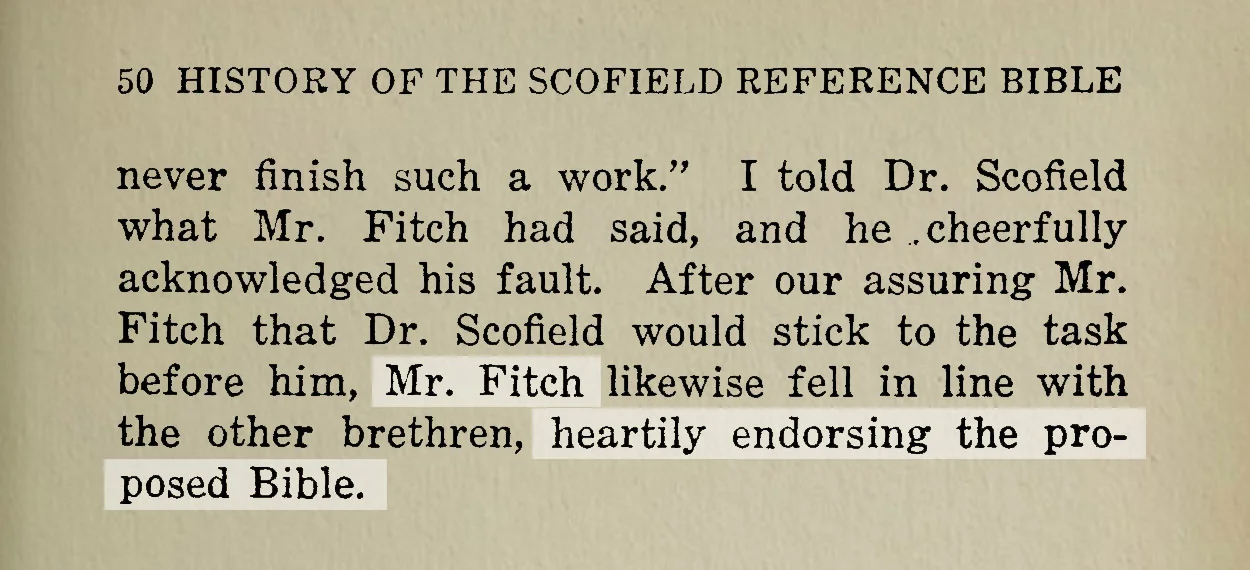
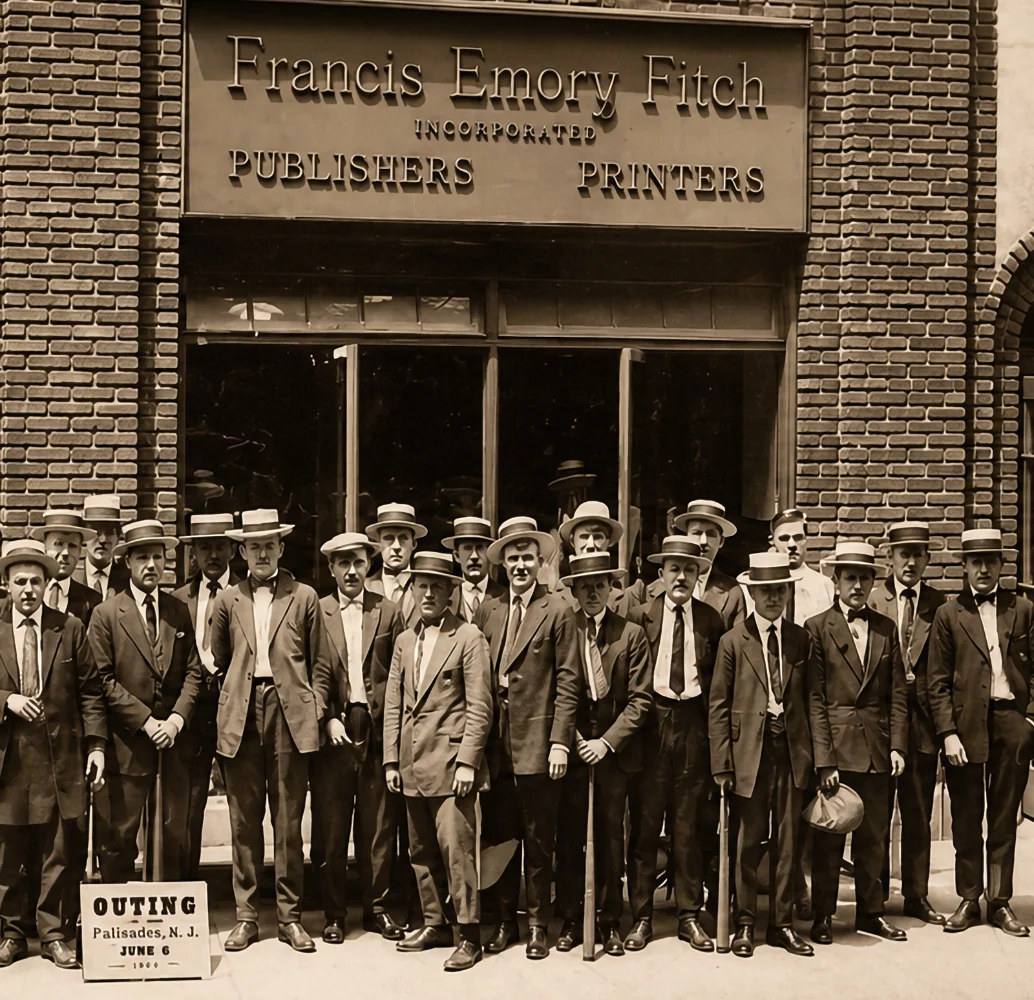
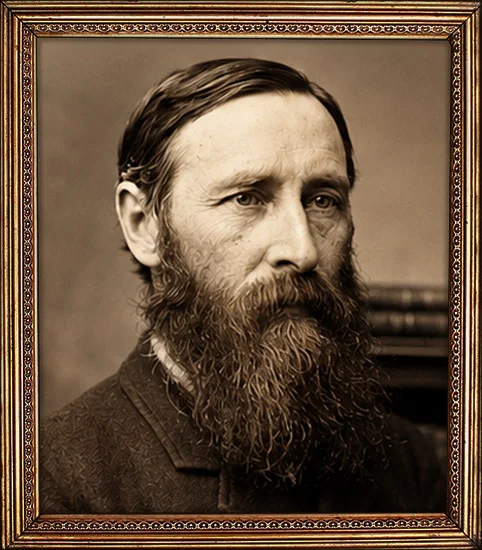
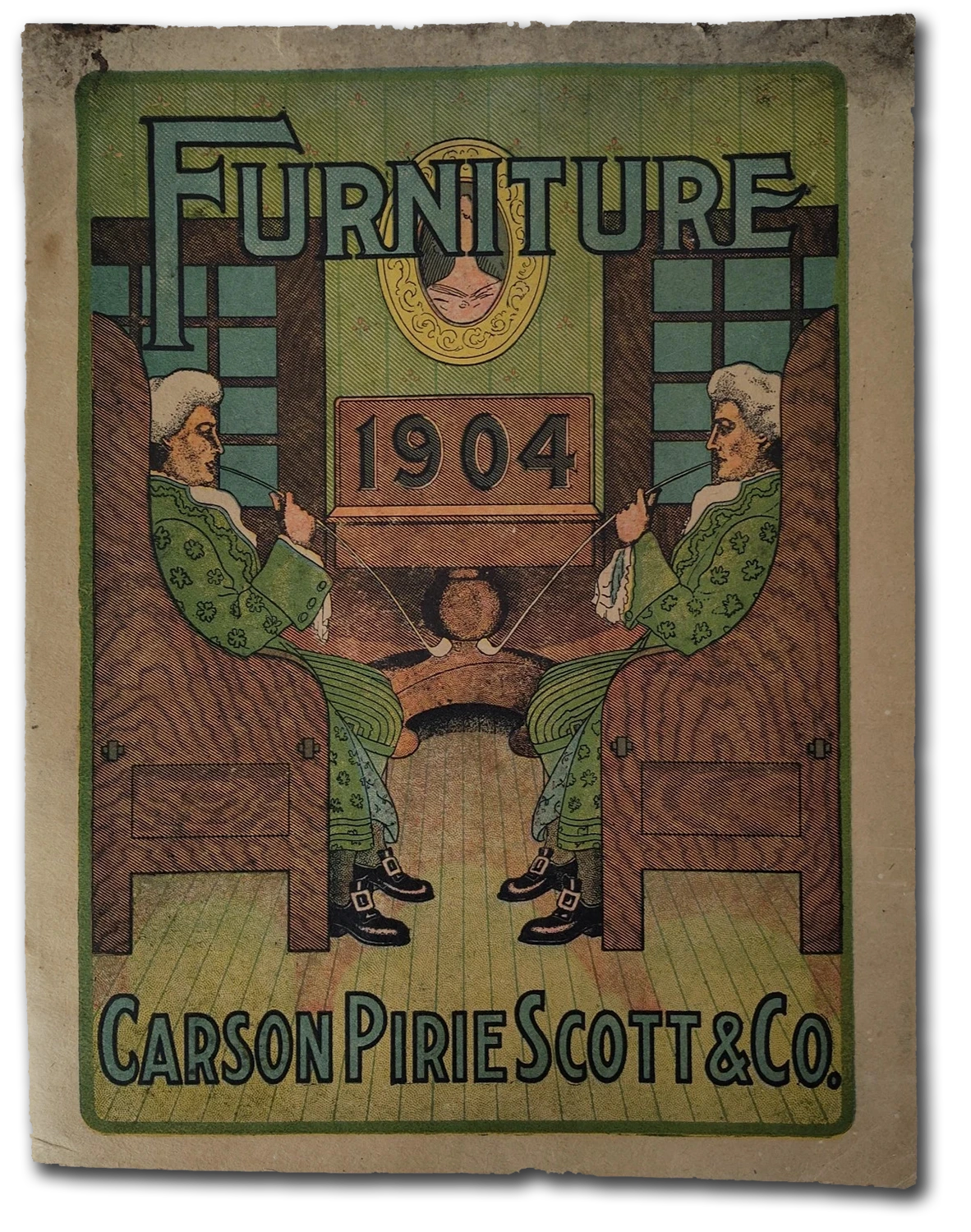
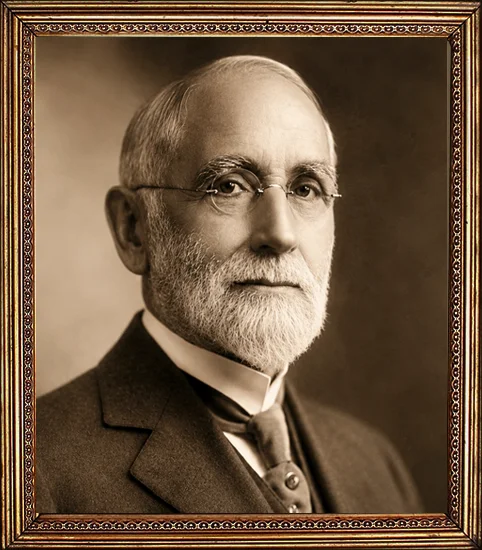
On pages 49–50, Arno C. Gaebelein provides a clear and unembellished list of those who financed the project, naming Alwyn Ball, John T. Pirie, John B. Buss, and Francis E. Fitch. The account is presented without speculation or intrigue—simply identifying known individuals within Scofield’s circle who contributed to the work. In doing so, Gaebelein frames the funding as arising from known, recognizable supporters of the project, not from any hidden or external source. Gaebelein’s historical book has been well-known and is readily available. Did Piper conduct primary research? If so, then why didn’t he reference these documented financiers? The uncomfortable answer is likely that the truth did not fit within the conspiratorial narrative many were wanting to craft.
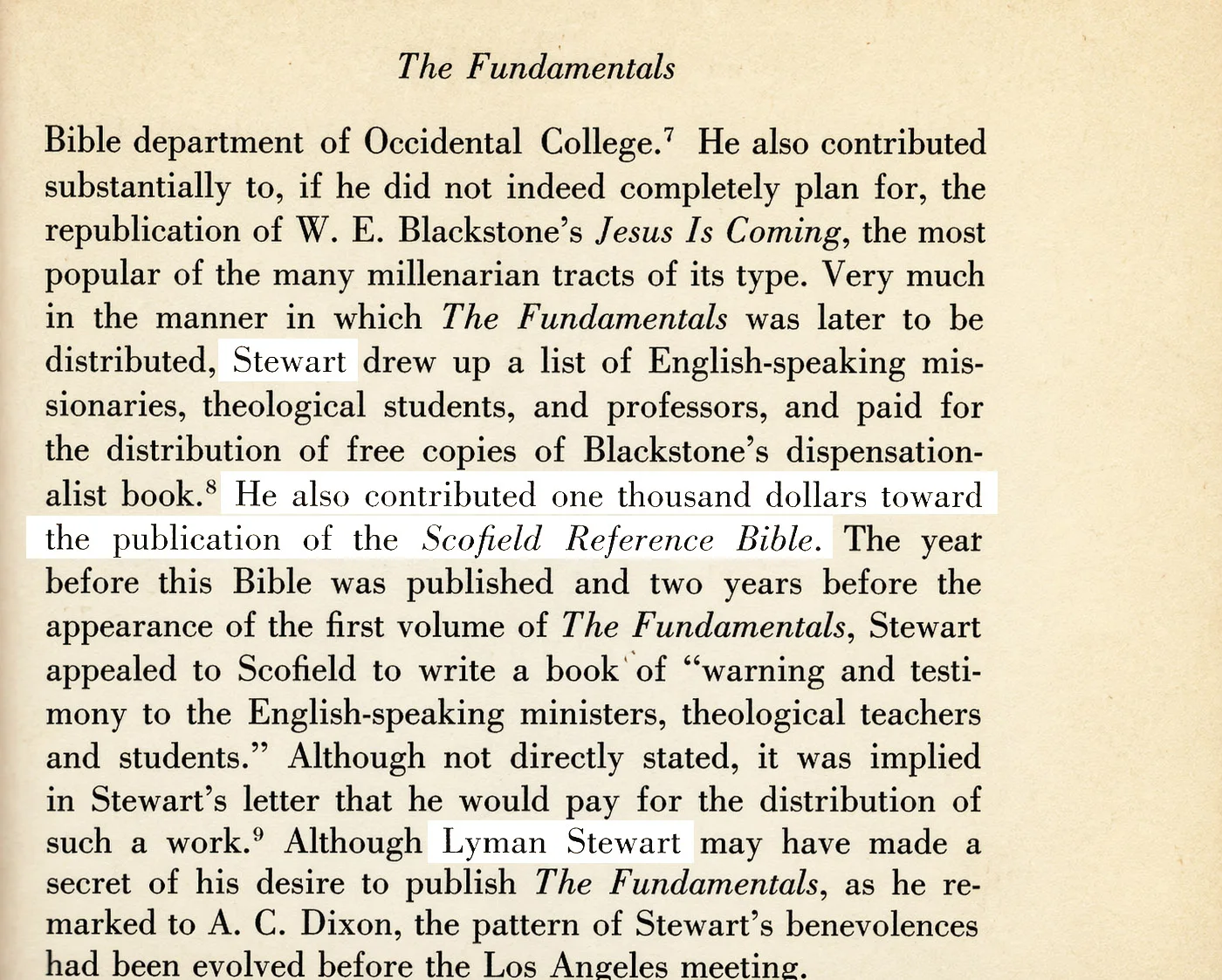
A fifth financial contributor (Lyman Stewart) is mentioned by Ernest R. Sandeen in The Roots of Fundamentalism: British and American Millenarianism, 1800–1930 (Univ. of Chicago Press, 1970, page 191). He provided the only known dollar amount donated by any of the contributors ($1,000 in 1908, which is the equivalent of $35,000 in 2026).
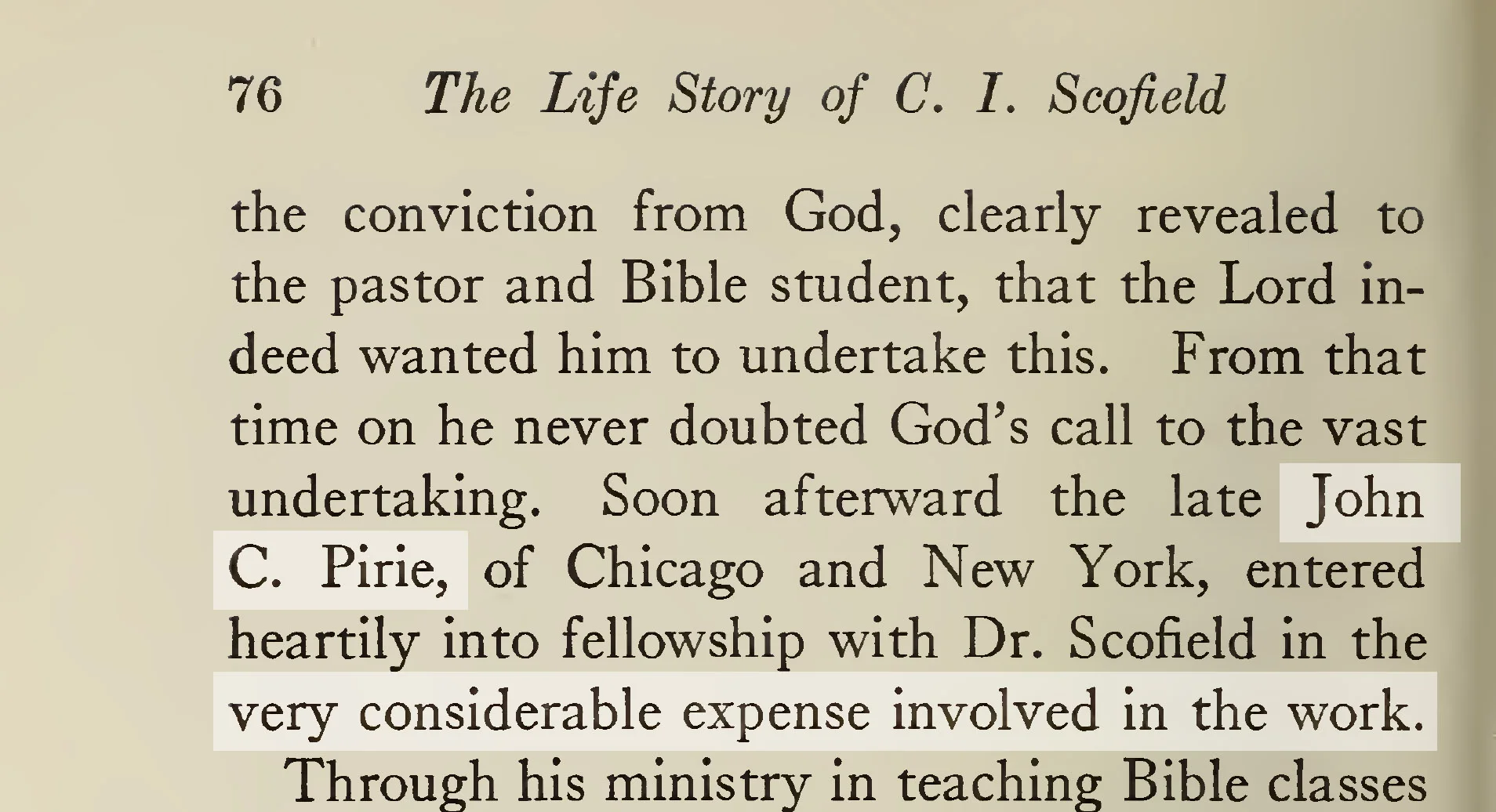
Charles G. Trumbull (1867–1941) was a prominent evangelical editor and writer. Moving within the same ministry groups as C. I. Scofield, Trumbull had direct access to Scofield and his associates, placing him in a position to record events from firsthand observation. His 1920 work, The Life Story of C. I. Scofield, is the earliest full-length biography of Scofield. Published shortly before Scofield’s death in 1921, it presents an insider account of his life, ministry, and the development of the Scofield Reference Bible.
Note: Trumbull incorrectly names one of the financial supporters as John C. Pirie, instead of John T. (Thomas) Pirie. This is likely a typo in the manuscript.
Click on any of the portraits below for a detailed biography for each of these 5 men:
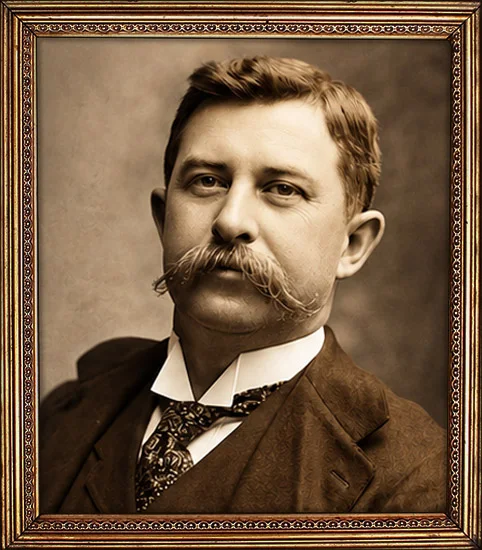
ALWYN BALL, JR
Location: New York City
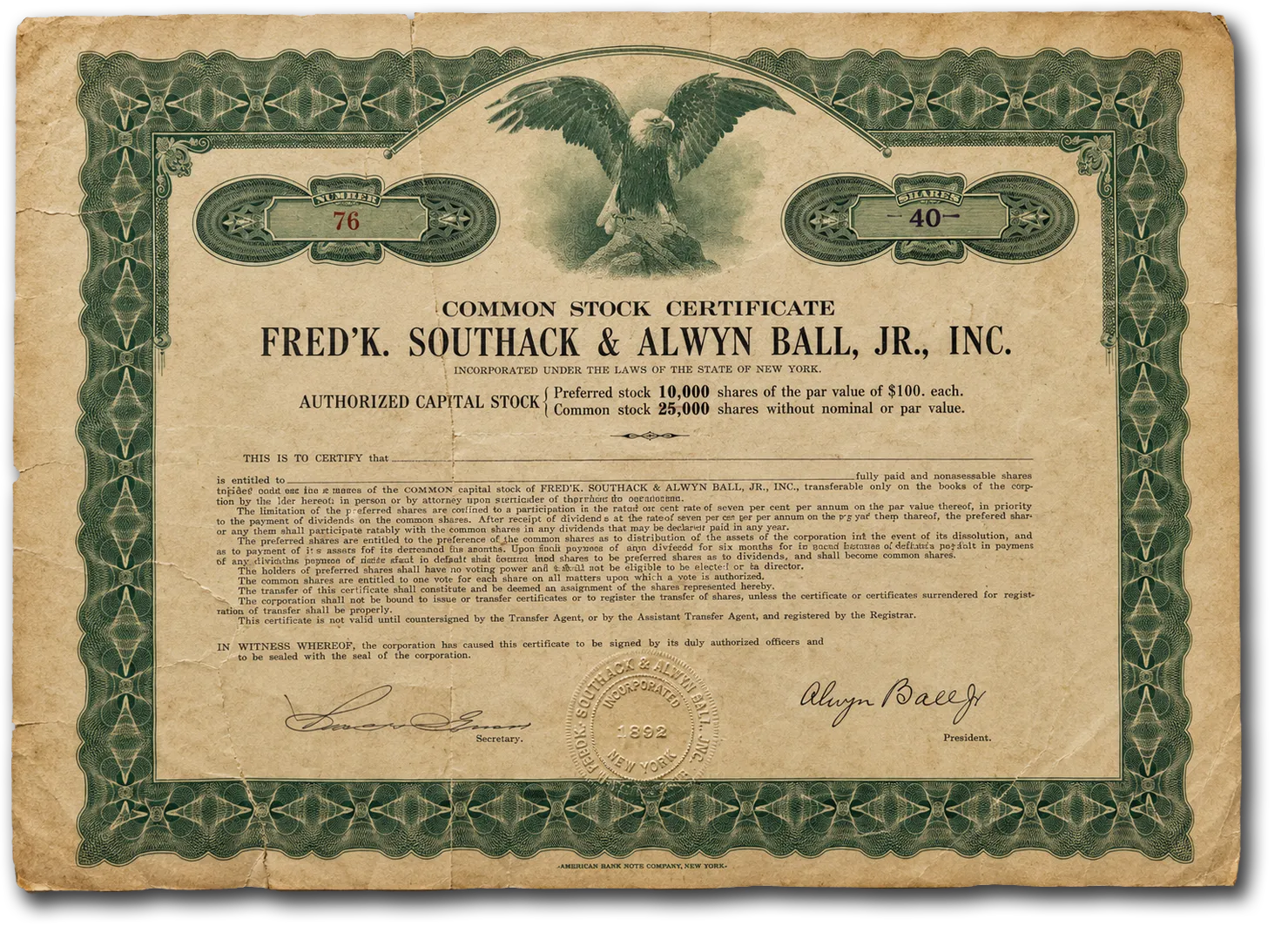
Business: Frederick Southack & Alwyn Ball, Jr.
Real Estate Brokerage, Business Investmenting. Ball was associated with the “skyscraper days” of Manhattan downtown business development.
Born: June 6, 1859
Died: March 14, 1937
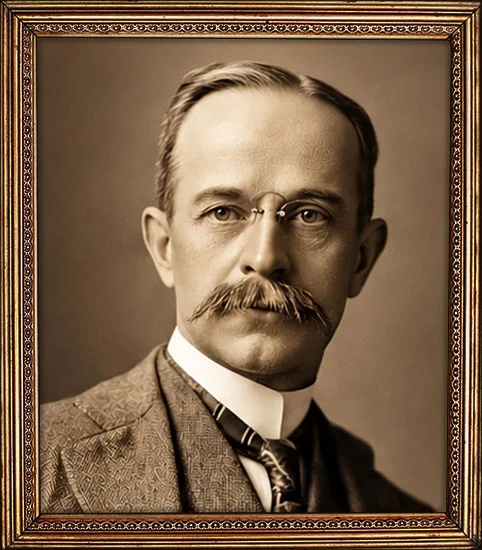
FRANCIS EMORY FITCH
Location: New York City
Business: Francis Emory Fitch Publishing/Exchange Printing Company
Financial printer and publisher specializing in New York Stock Exchange reports, securities publications, and Wall Street financial printing.
Born: September 15, 1850
Died: September 27, 1910
JOHN THOMAS PIRIE
Location: Chicago, Illinois
Business: Carson Pirie Scott & Company
Retail merchant and business executive, senior partner in one of the largest and most influential retail firms in the Midwest during the late 19th century.
Born: August 26, 1827
Died: April 24, 1913
LYMAN STEWART
Location: Los Angeles, California
Business: Union Oil Company of California
American oil businessman, co-founder of Union Oil Company of California (Unocal), one of the largest petroleum companies in the western United States during the late 19th and early 20th centuries.
Born: July 22, 1840
Died: September 28, 1923
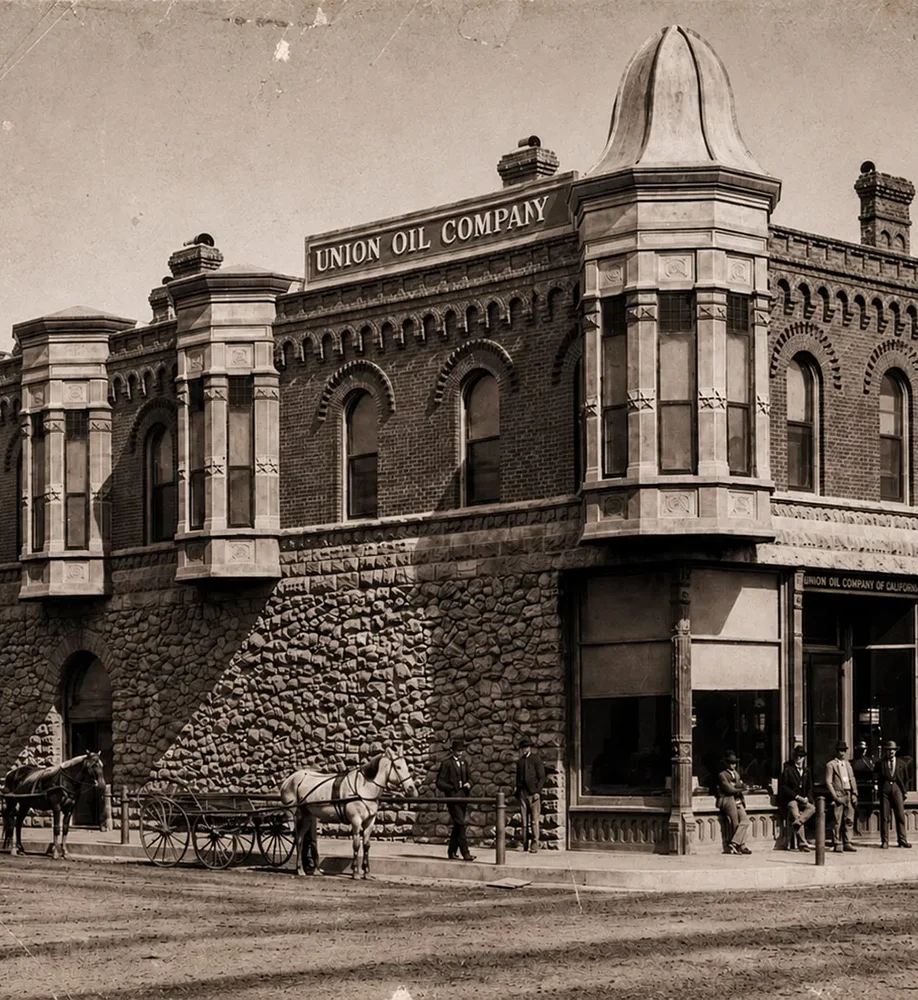

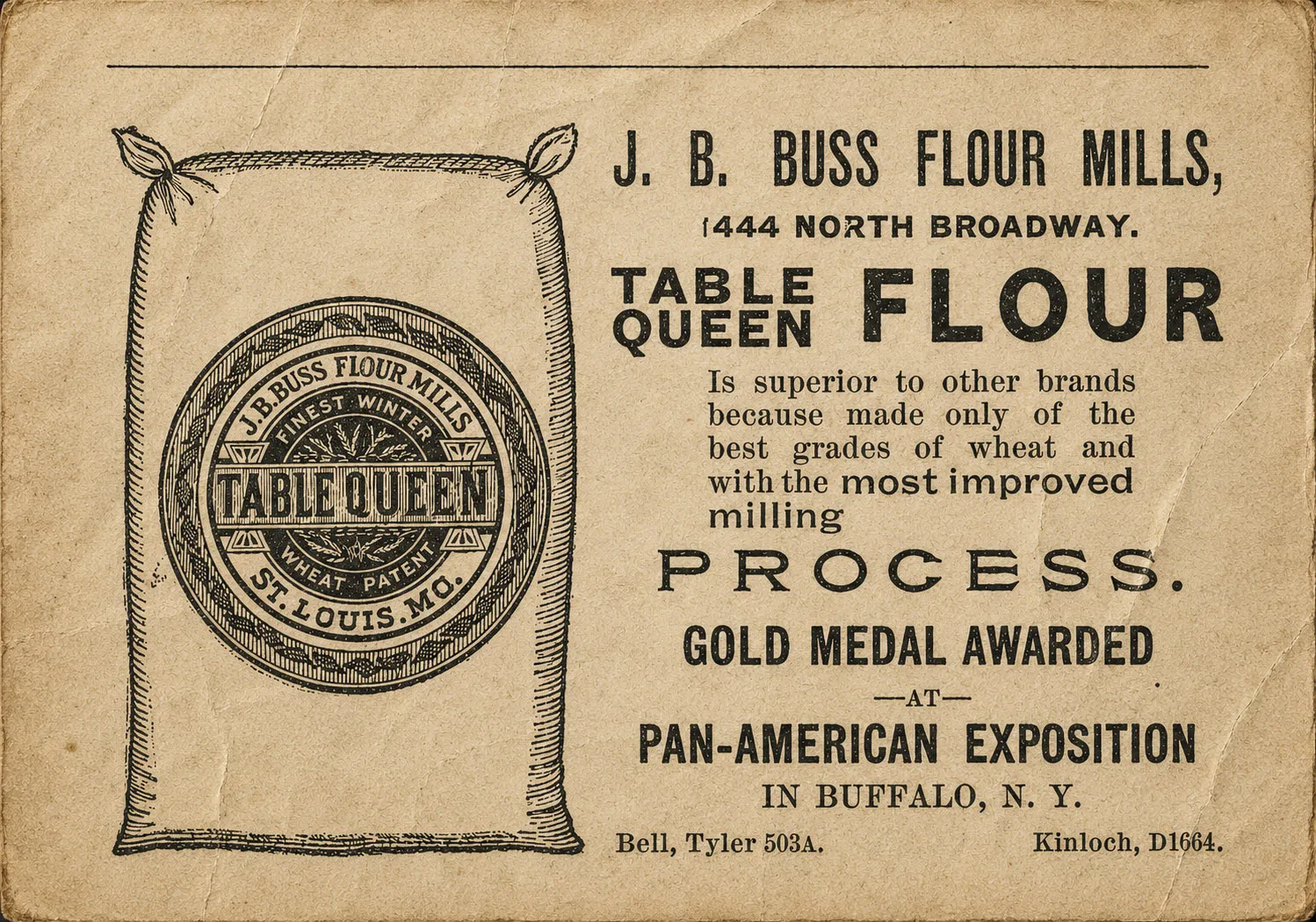
JOHN BEHRENDS BUSS
Location: St. Louis, Missouri
Business: J. B. Buss Flour Mills
Flour mill owner producing “Table Queen” flour and other wheat products during the late 19th and early 20th centuries. Buss supplied domestic and international flour markets during the city’s peak as a major American grain-processing center
Born: September 8, 1840
Died: October 20, 1912
Lyman Stewart was no ordinary religious donor. As co-founder of Union Oil, Stewart accumulated one of the great industrial fortunes of early twentieth-century America, transforming Union Oil into a massive enterprise during the very years C. I. Scofield and the dispensational movement were rising to national prominence. According to Harvard Business School, his company’s capitalization rose to $50 million in 1908, equivalent to $1.9 billion today.
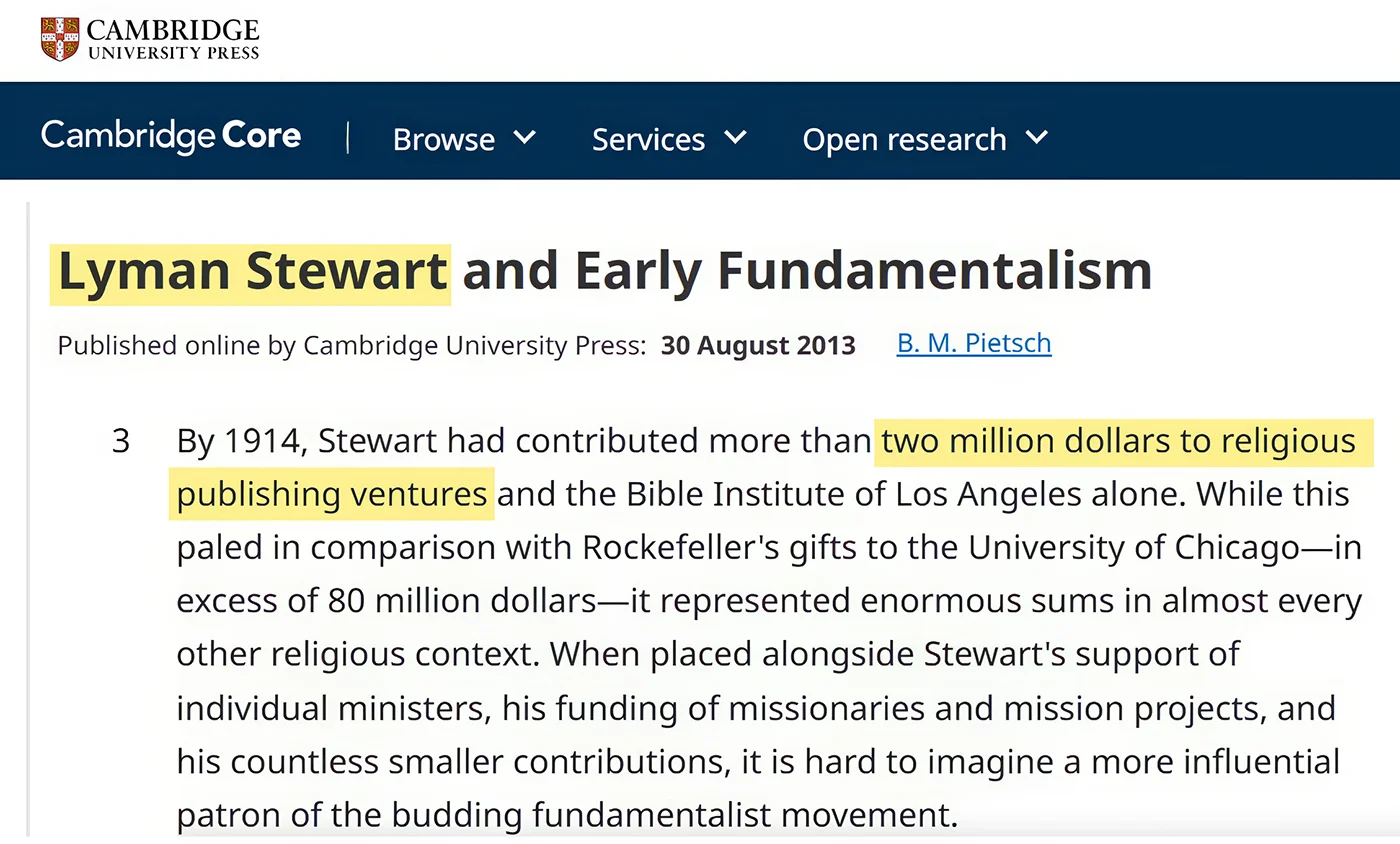
By 1914, scholarly research published in Church History noted that Stewart had already contributed “more than two million dollars” toward religious publishing ventures and the Bible Institute of Los Angeles alone — a staggering sum equivalent to more than $70 million in modern value. B. M. Pietsch, “Lyman Stewart and Early Fundamentalism,” Church History 82, no. 3 (2013): 618.
Stewart did not merely fund churches sporadically; he financed an entire theological infrastructure, underwriting ministers, missionaries, publishing operations, Bible institutes, and nationwide distribution campaigns. The existence of such openly documented Protestant wealth substantially weakens later claims that Scofield’s success required secret or hidden foreign sponsorship.
In the end, the historical evidence surrounding the financing of the Scofield Reference Bible points in a far different direction than later conspiracy claims suggest. While modern writers frequently assert that wealthy Jewish or Zionist figures secretly funded Scofield’s writing, travels, and publication efforts, no primary-source documentation has been produced connecting Scofield to any of the commonly named individuals.
By contrast, contemporaneous sources do identify a definite group of evangelical businessmen and supporters who openly financed the project and helped bring the study Bible to publication. The available evidence consistently points to ordinary private patronage from successful Protestant businessmen rather than a hidden international conspiracy. Since the modern Zionist-funding theory began circulating in recent decades, its central allegations have remained unsupported by the very kinds of evidence that would be required to establish them: financial records, correspondence, contemporaneous testimony, or any documented connection between Scofield and the men later accused of secretly funding him.
© 2026 Scofield-Files.com