Was the Lotos Club the Missing Piece?
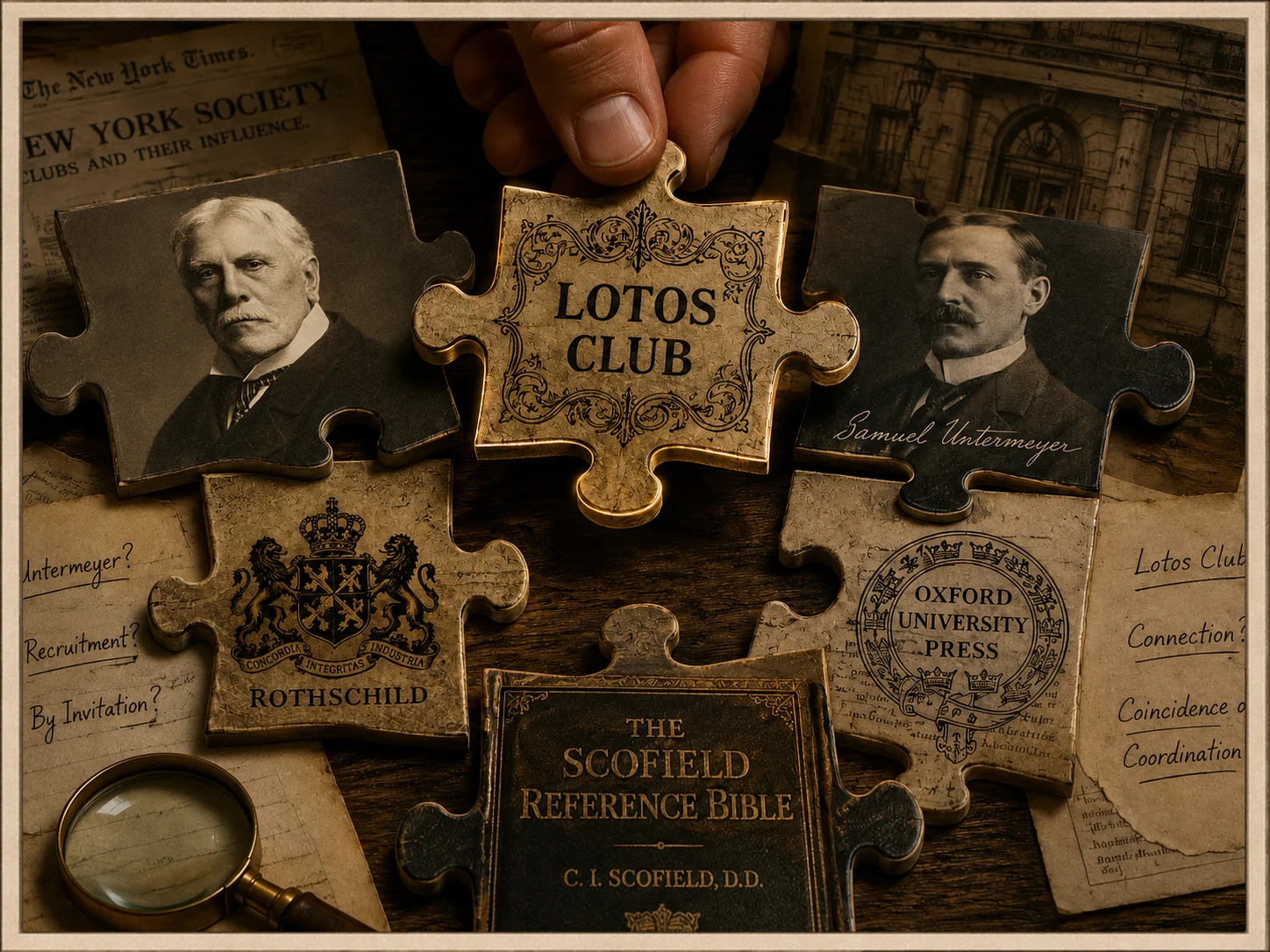
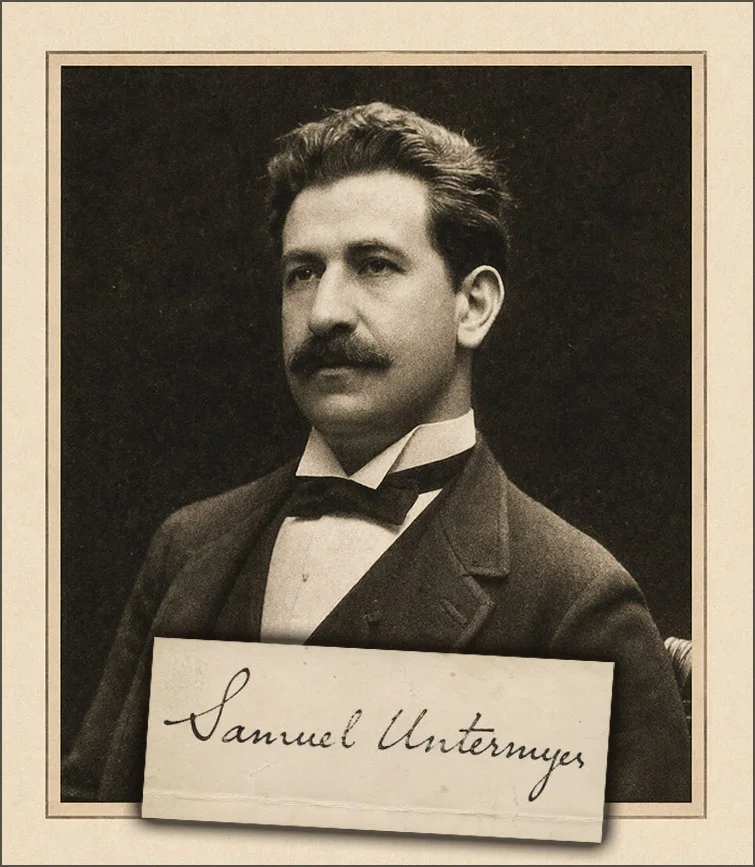
Few pieces of evidence are cited more often in the Scofield conspiracy narrative than C. I. Scofield’s membership in The Lotos Club. To many later writers, the connection appeared deeply suspicious: Scofield joined an elite New York social club that also included wealthy businessmen, influential public figures, and attorney Samuel Untermeyer — a Jewish man linked to early Zionist political activity.
Over time, The Lotos Club came to be portrayed as more than a simple social organization. It became, in the minds of many conspiracy advocates, the place where Scofield allegedly entered a network of influence connected to the future Scofield Reference Bible.
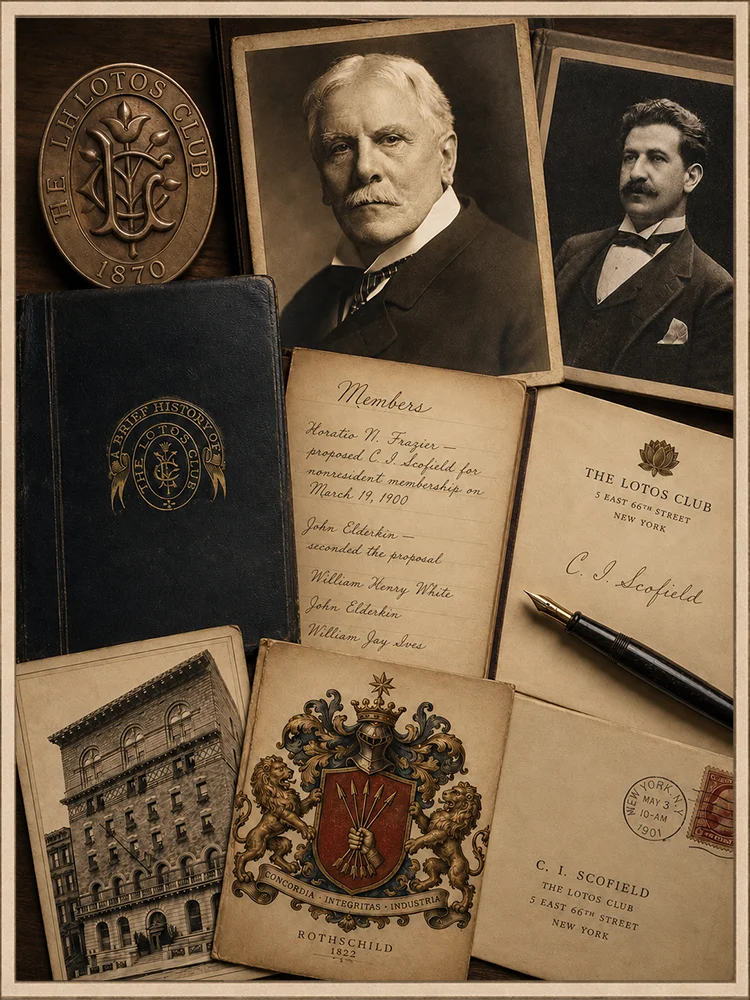
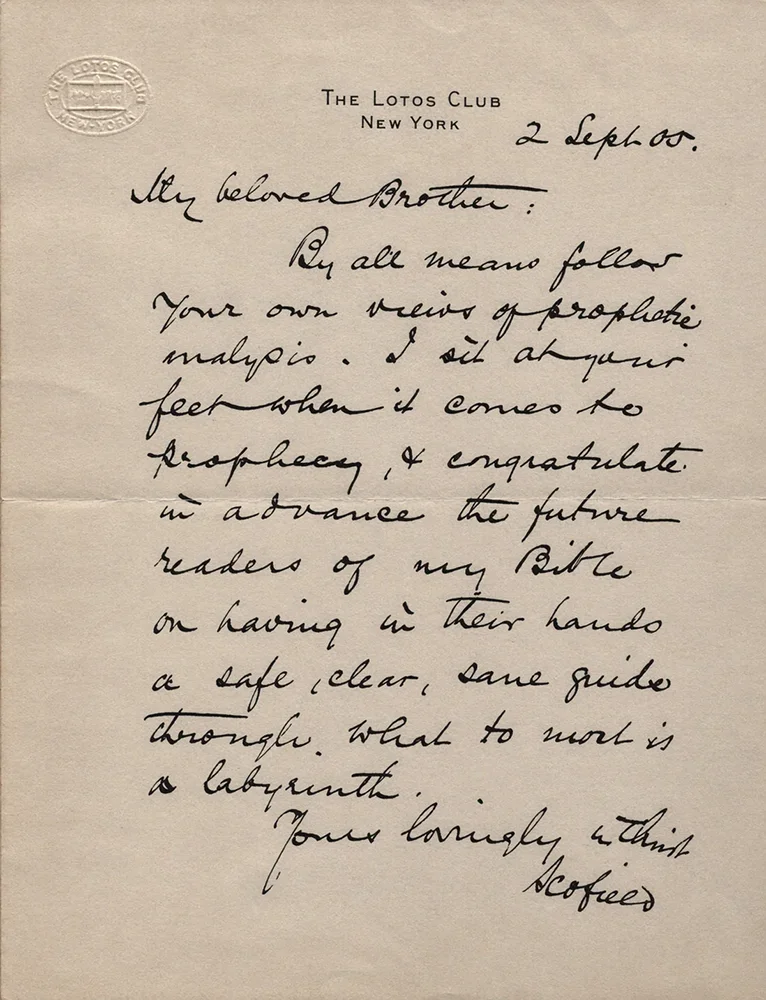
Let’s examine the facts. The connection between C. I. Scofield and The Lotos Club is not speculation or conspiracy theory. It is a matter of historical record. Scofield joined the club in 1900, and surviving membership documentation confirms his association with the organization. Records relating to his admission, including the names of members involved in the voting and sponsorship process, have survived. Scofield also used Lotos Club stationery in his personal correspondence.
These details are important because they demonstrate that Scofield’s involvement with the club was genuine, visible, and well documented. The historical question is therefore not whether Scofield had a connection to The Lotos Club — he clearly did — but rather what conclusions, if any, should reasonably be drawn from that connection. This distinction is critical because many later writers treated The Lotos Club not merely as a social affiliation, but as evidence of hidden ideological recruitment or Zionist political coordination operating behind the scenes.
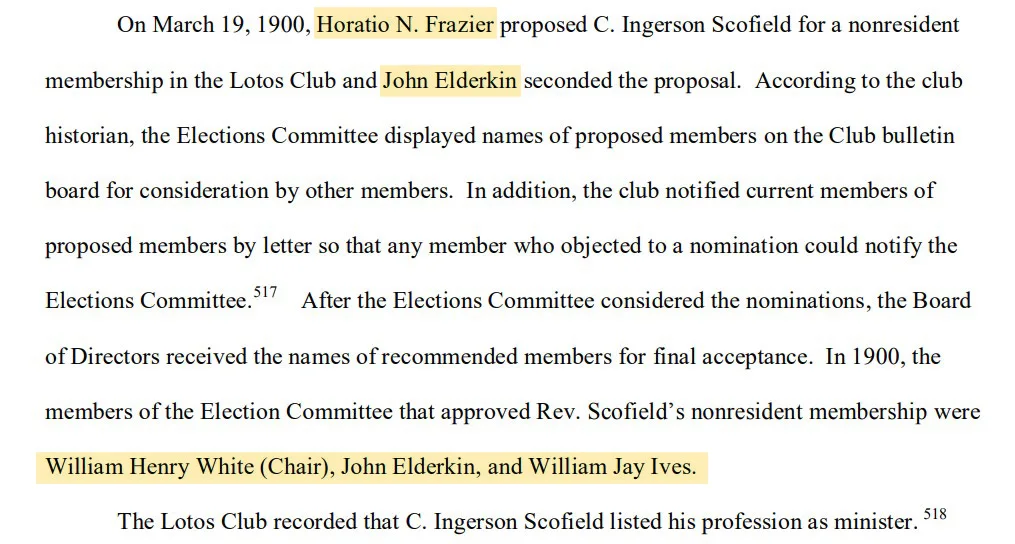
Surviving records examined by researcher D. Jean Rushing provide insight into Scofield’s admission process into The Lotos Club. According to those records, Horatio N. Frazier (Fraser) proposed C. I. Scofield for nonresident membership on March 19, 1900, while John Elderkin seconded the proposal. The surviving records also identify the members associated with the approval process, including: Horatio N. Frazier (Fraser), John Elderkin, William Henry White, and William Jay Ives. (From Confederate Deserter to Decorated Veteran Bible Scholar: Exploring the Enigmatic Life of C.I. Scofield 1861-1921. D. Jean Rushing, page 94)
These details matter because they move the discussion away from vague speculation and into documented institutional procedure. The admission process was not hidden. Most significantly, surviving records presently do not show Samuel Untermyer (Untermeyer) sponsoring Scofield’s admission, seconding his proposal, or serving among the individuals known to have approved his membership. That absence is historically crucial.
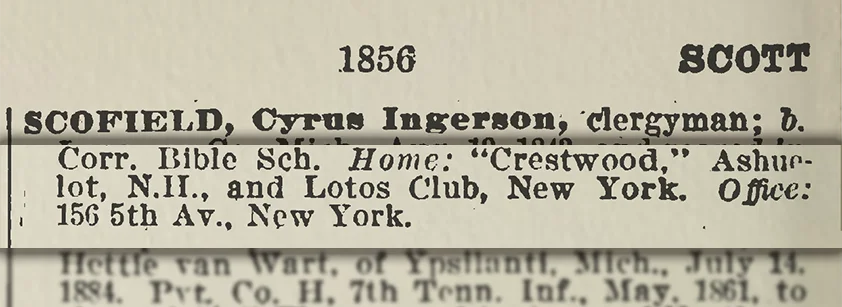
In his 1912–1913 vol. 7 Who’s Who in America entry (page 1856), Cyrus Ingerson Scofield listed the prestigious Lotos Club in New York City as one of his residences. His membership, and even his residence at the Lotos Club at times, is not in doubt. Many writers, beginning with Joseph Canfield in 1988, will question why a prominent, conservative Bible teacher would be associated with a secular group such as The Lotos Club.
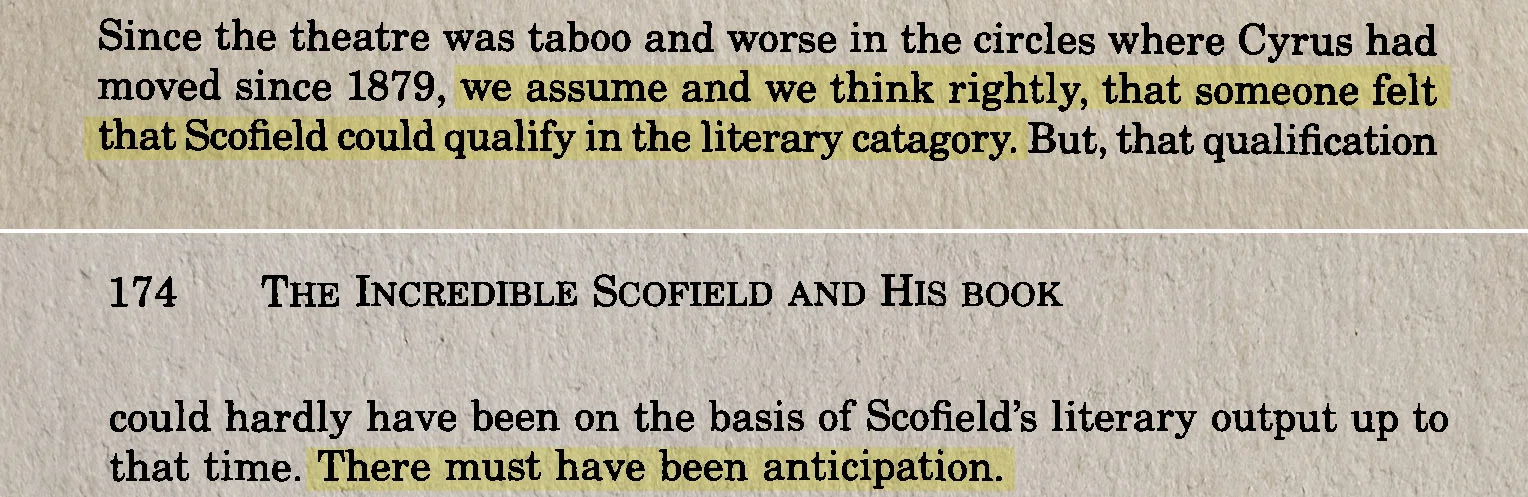
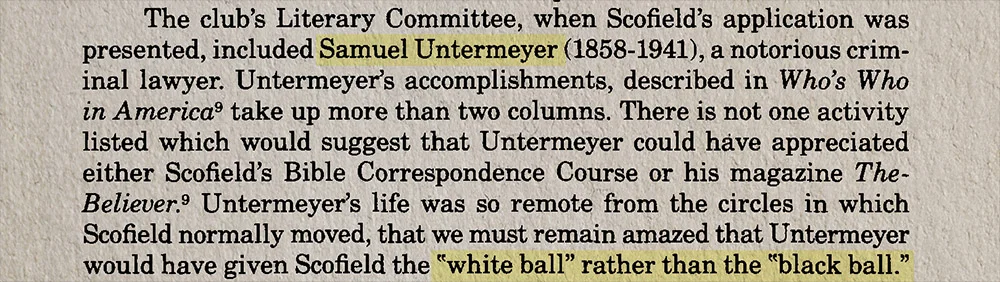

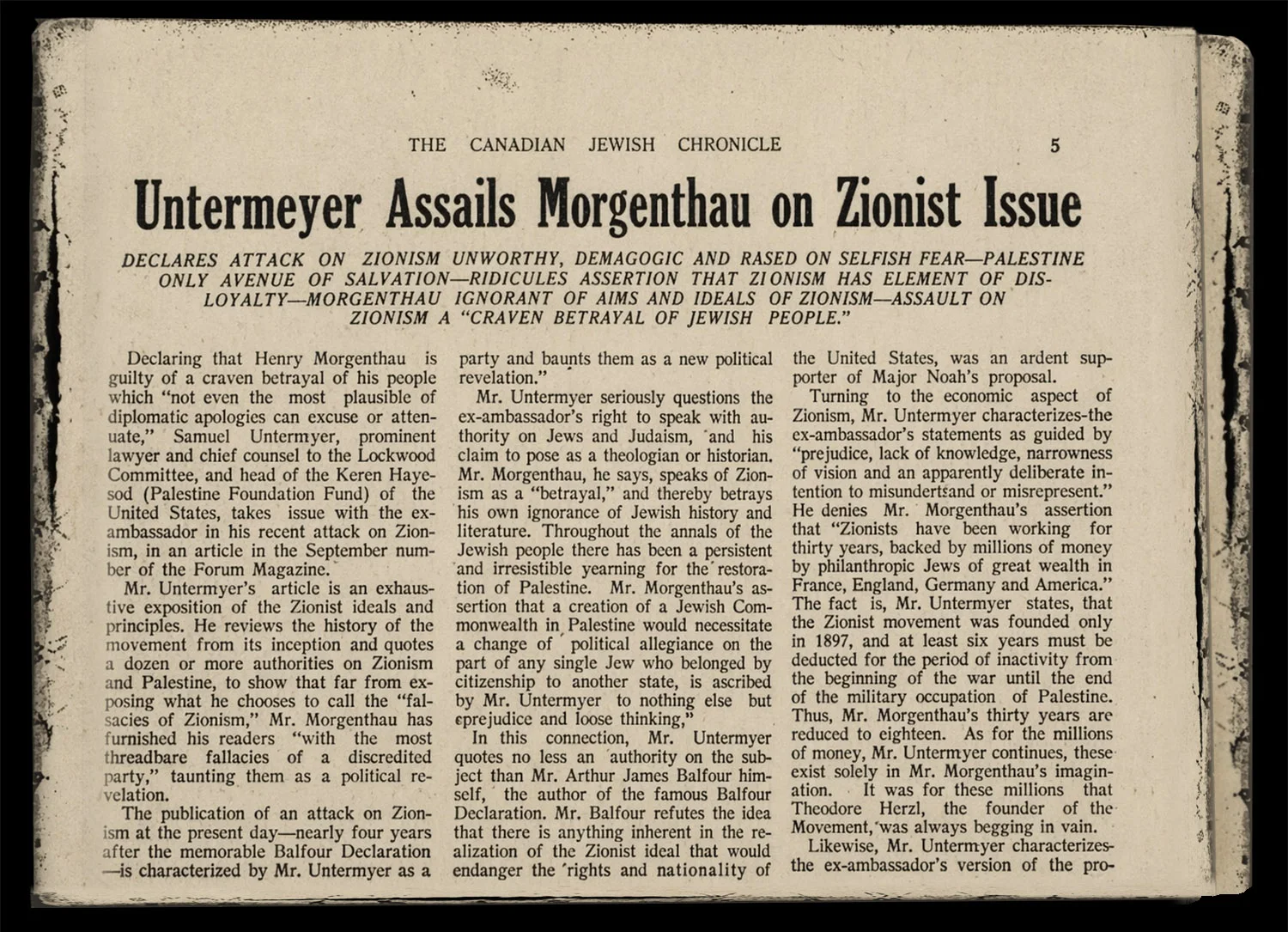
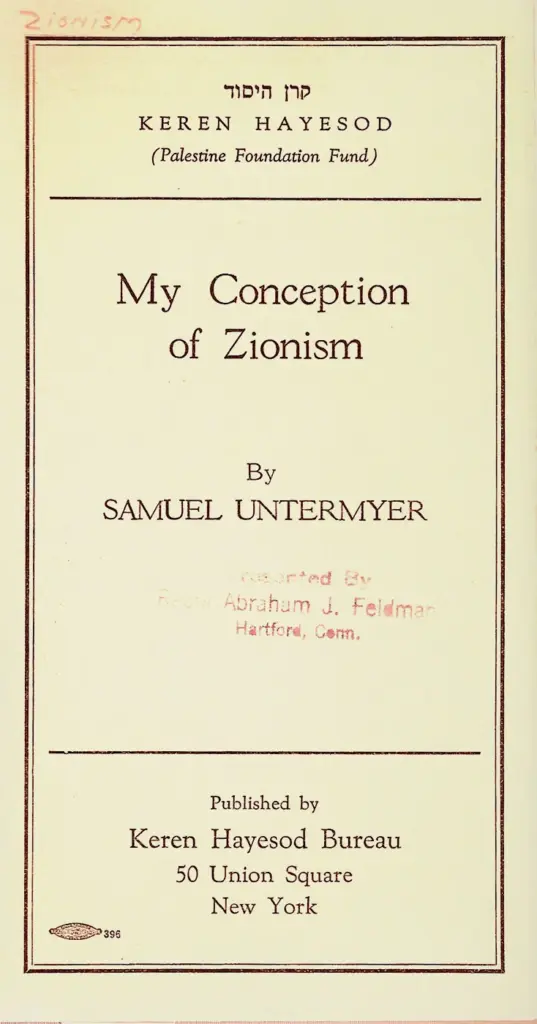
The Lotos Club connection later became especially controversial because of the club’s broader social network. Among the many prominent members associated with the club during the era was attorney Samuel Untermyer, a wealthy New York lawyer and prominent Zionist figure who had joined the club in 1893. Joseph Canfield, in The Incredible Scofield and His Book (1988), later drew attention to the overlap between Scofield’s membership and Untermyer’s presence within the club (pages 173, 174). Canfield stopped short of claiming direct proof of secret sponsorship, but argued that the connection “strengthens the suspicion” that influential figures may have helped advance Scofield’s career.
Canfield and other conspiracy theorists hinted at (or proposed) that Scofield was recruited before joining the Lotos Club or at least being moved in that direction by anonymous figures. But that will present a serious problem for their theory, which will be addressed later.

Continuing on page 174, Canfield was hunting for clues, and then discovers one… a theological fingerprint, so to speak. As Canfield put it, Scofield taught the “postponed Kingdom theory” – the position that God made literal land promises to Abraham and his descendants, involving a future kingdom with the Messiah ruling from Jerusalem. This kingdom was initially “postponed” when the Jews rejected Jesus.
Canfield, the detective, tried to solve a mystery largely of his own making. But he found a clue: Scofield taught that the Jews will one day return to their homeland, and Samuel Untermyer was involved in Zionism, a movement seeking a Jewish homeland. Canfield insinuated that Untermyer used Scofield (an unqualified Christian author) to push a particular Jewish agenda.
This is where Canfield’s nagging suspicion begins. He asserts that Scofield’s membership is unusual on two fronts:
(1) As a Christian, Scofield should not have been associated with such a secular group.
(2) Scofield was an unlikely candidate due to his lack of literary depth.
First, rather than compromising his faith, such associations provided opportunities for an up-and-coming Christian figure to interact with influential audiences and participate in a wider discourse. In that context, membership in a literary club was less about a secular club and likely more about being present in the circles where ideas were exchanged and shaped.
Regarding his unlikely candidacy, it isn’t that surprising that a prominent Christian speaker and writer like C.I. Scofield would have been admitted to the Lotos Club. The organization valued public influence, literary output, and speaking reputation. Additionally, Scofield was connected to very popular figures, such as D.L. Moody, which gave him immediate credibility.
Research D. Jean Rushing offered “It seems more likely that the Lotos Club’s long history of devotion to the arts and literary works appealed to Rev. Scofield. He not only loved classic literature and art prints but enjoyed the theatre as well. In addition, Rev. Scofield may have thought Club acquaintances would be helpful to getting a large publishing project off the ground…” (From Confederate Deserter to Decorated Veteran Bible Scholar: Exploring the Enigmatic Life of C.I. Scofield 1861-1921. D. Jean Rushing, page 95)
Everything hinges on one basic premise: Scofield and Untermyer were close associates at the Lotos Club.
But there are a few problems with this necessary condition:
(1) The Lotos Club had several hundred members. Even if Scofield and Untermyer were at every event for many years, there is no guarantee that they would have even encountered one another.
(2) There is not a single mention of Untermyer in any document by Scofield. If Untermyer were a pivotal mentor or a “career guide” then surely Scofield would have mentioned his name in a letter or in a documented conversation.
(3) Untermyer never mentioned Scofield in any known letter, speech, booklet, pamphlet, or telegram.
(4) The first person known to attempt to connect Scofield and Untermyer is Joseph Canfield in 1988.
There is no doubt, Samuel Untermyer was a key figure in Zionism in the 20th century. But there is a problem for Canfield’s suspicion that Untermyer coached or guided Scofield. And that problem is TIMING: the timeline simply doesn’t support the tenuous claim very well. Samuel Untermyer did not emerge as a prominent Zionist activist until the early 1920s, whereas Scofield had already developed his Dispensational views on Israel by the early 1880s and published the Scofield Reference Bible in 1909.
Scofield’s theology was fully formed and widely disseminated decades before Untermyer’s Zionist involvement became active, making any direct influence chronologically implausible (but not impossible). In addition, Scofield died on July 24, 1921, just as Untermyer was gaining traction in the Zionist cause.
Why The Lotos Club May Undermine the Conspiracy Narrative
An important detail often overlooked in later conspiracy discussions is that the theory does not merely claim Scofield encountered Samuel Untermyer after joining The Lotos Club. In many versions of the narrative, the claim is stronger: that Untermyer himself helped bring Scofield into the club to cultivate him for a future ideological purpose. But if that is true, The Lotos Club connection becomes even more difficult to explain. The Lotos Club becomes a liability, not an asset.
Under this version of the theory, Scofield would already have been considered important enough to recruit before entering the club. The alleged relationship and ideological interest would therefore have already existed. If so, then why run the added risk of placing Scofield into a highly visible New York social organization? Why create a public connection that future researchers (or contemporary ones) could identify and scrutinize? Zionists could have worked with Scofield below the radar without the inexplicable exposure of a high-profile association. This is where the theory begins to work against itself.
But, even if one were to claim that Scofield had been recruited by Samuel Untermyer after joining The Lotos Club, there is no evidence that such a relationship ever existed. The first time it was alleged was about eight decades later. The theory hinges on Untermyer providing access to wealthy Jews to fund the bible project. But we already have a sufficient trail of successful American businessmen who funded the writing and publishing of the Scofield Reference Bible, as well as Scofield’s travels overseas (Click here for information about the question “Who Funded the Scofield Reference Bible?“).
The theory also proposes that these Zionists encouraged Scofield with a pro-Israel theology to subvert Western Protestantism, but yet Scofield had already been teaching and writing about God’s future for the Jews in their historic homeland for nearly two decades before joining the Lotos Club. This cannot be disputed.
Some conspiracy advocate that a sophisticated covert operation involving influential financiers and political figures operated for years without leaving behind a single letter, financial record, or document tying the effort together. Yet some versions of the theory also claim that these same masterminds somehow made the remarkable mistake of publicly placing C. I. Scofield into the Lotos Club, one of New York’s most visible organizations. The perfect crime and the perfect criminal somehow dropped a business card.
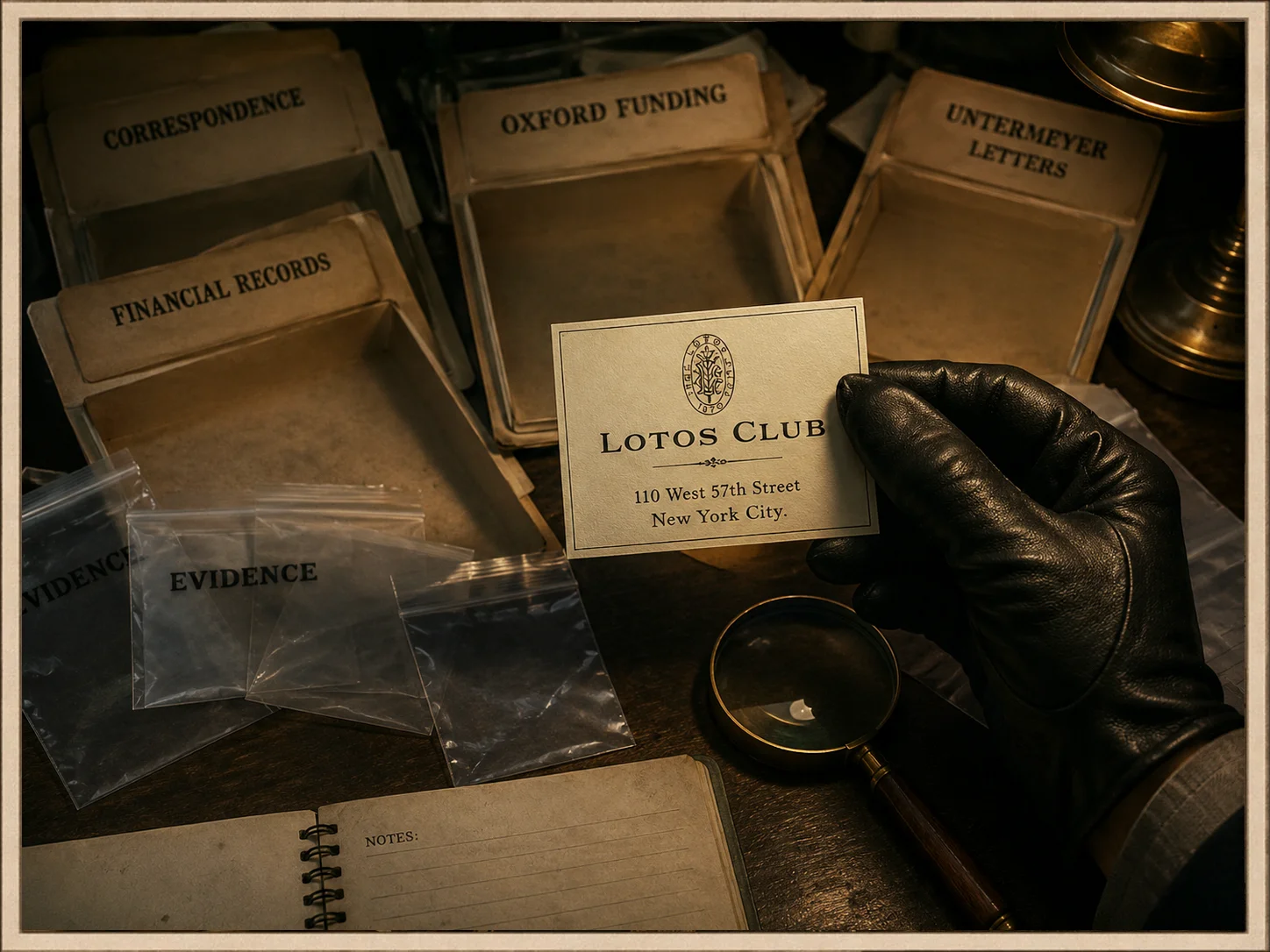
Whatever one ultimately concludes about Scofield, the surviving historical evidence simply does not support the existence of a carefully concealed ideological operation secretly directing his career through The Lotos Club. What the records actually reveal is something far less dramatic, but far more historically grounded: a visible and ambitious religious figure moving within the literary, publishing, and social networks of early twentieth-century New York.
© 2026 Scofield-Files.com